



Introduction
As businesses grow, operational complexity increases faster than most leadership teams expect.
At first, systems usually appear manageable.
A company may initially operate using:
- local servers
- spreadsheets
- disconnected software tools
- manual reporting systems
- shared drives
- physical infrastructure
In early stages, this often works well enough.
However, as businesses expand:
- teams grow
- operational demands increase
- customer expectations rise
- reporting becomes more complex
- infrastructure pressure increases
- remote collaboration becomes necessary
At that point, many companies discover that their technology environment was never designed for scale.
This is where cloud computing solutions for growing businesses become critically important.
Cloud infrastructure is no longer simply a technology upgrade.
It has become an operational growth requirement.
Businesses now rely heavily on:
- operational visibility
- centralized systems
- scalable infrastructure
- remote accessibility
- integrated workflows
- real-time reporting
- digital collaboration
Without modern infrastructure, operational inefficiencies begin slowing growth quietly over time.
This is why businesses across industries are rapidly adopting cloud computing systems to improve flexibility, scalability, operational performance, and long-term resilience.
What Is Cloud Computing?
Cloud computing refers to delivering computing services through internet-based infrastructure rather than relying entirely on physical on-site systems.
These services may include:
- servers
- software
- networking
- databases
- storage
- analytics
- cybersecurity tools
- operational applications
Instead of maintaining expensive local infrastructure internally, businesses can access scalable cloud environments that adapt more efficiently to operational growth.
Cloud computing changes how businesses operate because it centralizes infrastructure while improving flexibility and accessibility.
Modern cloud systems allow organizations to:
- access systems remotely
- centralize operational workflows
- improve reporting visibility
- support distributed teams
- reduce infrastructure limitations
- improve scalability
Cloud infrastructure has fundamentally changed modern business operations.
Why Growing Businesses Are Moving to Cloud Infrastructure
One of the biggest operational problems growing companies face is infrastructure strain.
As businesses scale, operational complexity grows exponentially.
Systems that worked during early stages often become operational bottlenecks later.
Common problems include:
- slow systems
- disconnected software
- manual workflows
- server instability
- reporting inefficiencies
- limited storage
- remote collaboration problems
- infrastructure downtime
Traditional infrastructure environments struggle adapting quickly to business growth.
Cloud computing solves many of these scalability limitations.
Instead of rebuilding infrastructure repeatedly, businesses can scale dynamically through cloud-based systems.
This creates:
- operational flexibility
- infrastructure resilience
- scalability efficiency
- centralized visibility
Modern growth increasingly depends on operational adaptability.
Cloud infrastructure improves that adaptability significantly.
The Biggest Infrastructure Problems Growing Businesses Face
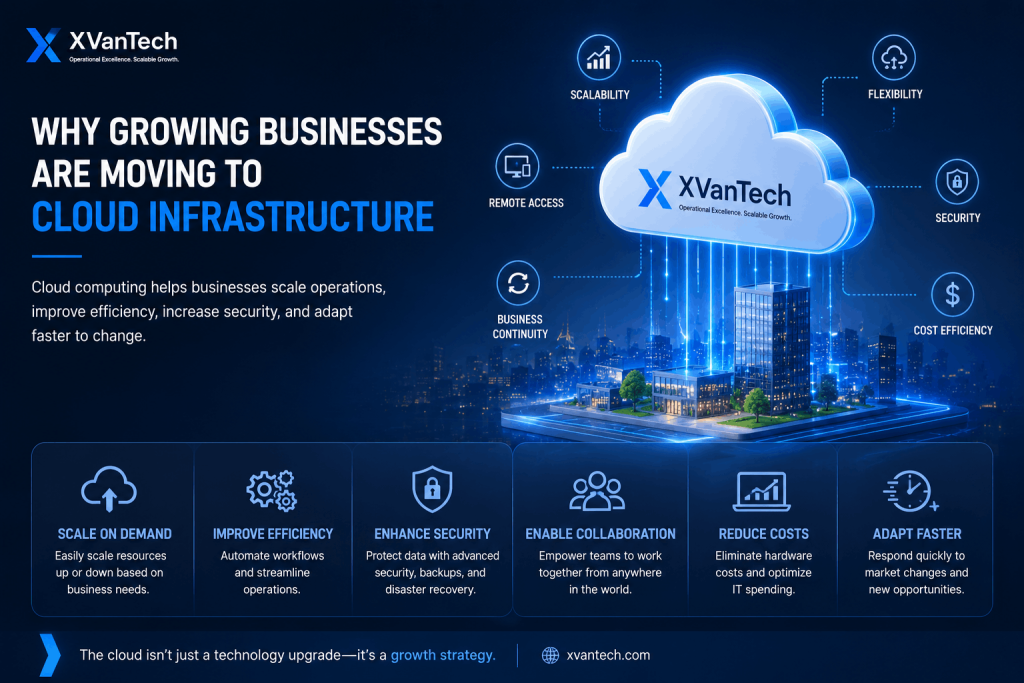
Many companies delay cloud modernization until operational inefficiencies become severe.
This creates hidden operational costs.
1. Infrastructure Scalability Limitations
Traditional systems often struggle scaling efficiently.
As operations grow, businesses usually experience:
- storage limitations
- slower systems
- infrastructure overload
- reporting delays
- system instability
Local infrastructure often becomes difficult to maintain at scale.
Cloud systems solve this by allowing businesses to increase resources dynamically without rebuilding operational infrastructure manually.
2. Disconnected Operational Systems
Many growing companies rely on multiple disconnected tools.
Examples include:
- accounting software
- payroll systems
- CRM platforms
- project management tools
- inventory systems
- operational reporting systems
When systems do not integrate properly:
- workflows become fragmented
- reporting becomes inconsistent
- operational visibility decreases
Cloud-based infrastructure improves operational integration significantly.
3. Remote Collaboration Challenges
Modern businesses increasingly operate with:
- remote teams
- hybrid work environments
- distributed operations
- external contractors
- multiple operational locations
Traditional infrastructure environments often create:
- access limitations
- file-sharing problems
- workflow inefficiencies
- operational delays
Cloud systems improve remote collaboration by centralizing operational access securely.
4. Rising Infrastructure Costs
Physical infrastructure creates ongoing expenses including:
- hardware maintenance
- server upgrades
- infrastructure downtime
- operational maintenance
- security management
- physical equipment replacement
As businesses scale, these costs increase significantly.
Cloud computing often creates more predictable operational cost structures.
5. Poor Operational Visibility
Operational visibility has become one of the most important competitive advantages for modern businesses.
Leadership teams require real-time access to:
- financial reporting
- operational dashboards
- workforce performance
- customer analytics
- infrastructure monitoring
Disconnected systems reduce visibility.
Cloud infrastructure centralizes operational information and improves accessibility.
How Cloud Computing Improves Business Scalability
Scalability is one of the biggest reasons businesses invest in cloud systems.
Traditional infrastructure environments scale slowly.
Cloud systems scale dynamically.
This allows businesses to:
- support larger teams
- manage growing workloads
- increase storage capacity
- expand operational infrastructure
- integrate new systems more efficiently
Without scalable infrastructure, operational growth eventually becomes unstable.
Cloud computing reduces that risk.
Operational Flexibility & Business Agility
Modern business environments change rapidly.
Companies must adapt quickly to:
- customer demand changes
- operational growth
- workforce changes
- infrastructure pressure
- digital transformation
Traditional infrastructure often slows adaptability.
Cloud systems improve:
- deployment speed
- operational responsiveness
- infrastructure flexibility
- system accessibility
Businesses become more agile operationally.
This flexibility is increasingly important in competitive markets.
The Role of Cloud Infrastructure in Data Management
Growing businesses generate large amounts of operational data daily.
Examples include:
- financial records
- customer information
- payroll data
- reporting systems
- operational analytics
- workforce data
- project management information
Without centralized infrastructure, data becomes fragmented across systems.
This creates:
- reporting delays
- operational confusion
- duplicate information
- poor visibility
- reduced decision-making quality
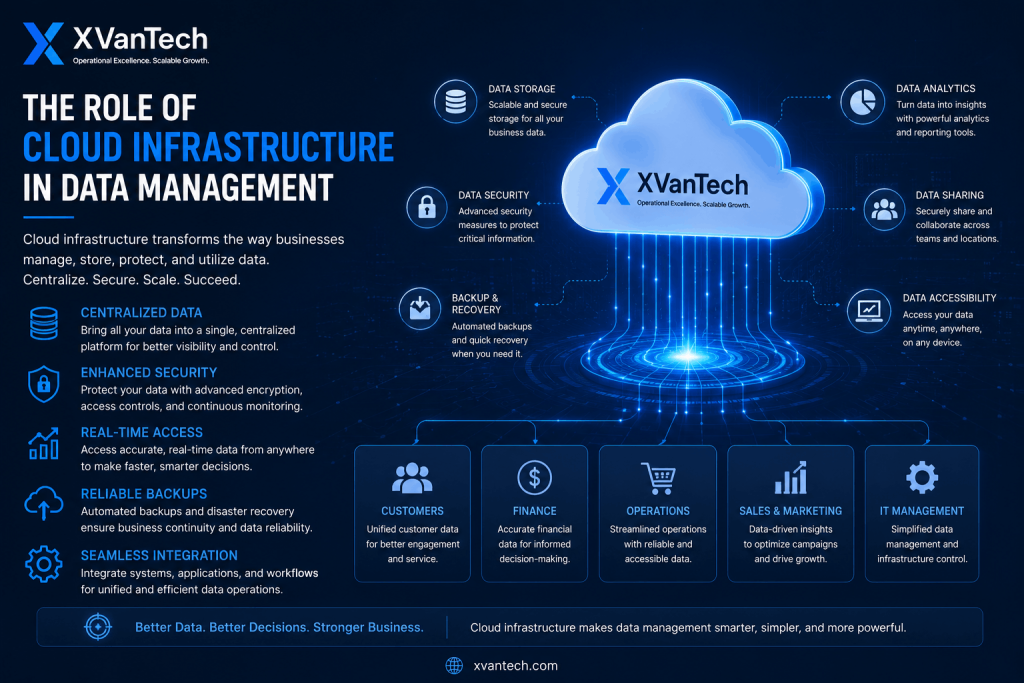
Cloud computing improves centralized data management significantly.
Businesses gain:
- better reporting visibility
- centralized operational access
- improved synchronization
- operational consistency
Cloud Computing & Operational Efficiency
Many businesses underestimate how deeply infrastructure affects operational performance.
Poor infrastructure creates:
- workflow delays
- system instability
- reporting inefficiencies
- communication problems
- operational bottlenecks
Cloud systems improve operational efficiency by reducing infrastructure friction.
This allows teams to:
- collaborate faster
- access systems remotely
- automate workflows
- improve reporting speed
- reduce manual operational dependency
Operational efficiency improves scalability.
Cloud Infrastructure & Cybersecurity
Security concerns are one of the biggest reasons some businesses hesitate adopting cloud systems.
However, outdated infrastructure often creates even larger security risks.
Many local systems lack:
- modern access controls
- centralized monitoring
- advanced backup systems
- infrastructure redundancy
Cloud systems often improve:
- access management
- backup reliability
- infrastructure monitoring
- operational continuity
- disaster recovery capabilities
However, cloud security still requires:
- proper configuration
- access policies
- security governance
- infrastructure oversight
Cloud systems are not automatically secure.
Operational management remains important.
Why Cloud Migration Fails for Some Businesses
Cloud migration itself is not enough.
Many companies experience problems because migration is poorly planned.
Common mistakes include:
- rushed implementation
- poor operational integration
- weak infrastructure planning
- disconnected workflows
- lack of scalability planning
Cloud migration should be approached strategically.
Successful implementation requires:
- operational analysis
- workflow understanding
- infrastructure planning
- scalability forecasting
Without structured implementation, businesses may simply transfer inefficiencies into cloud environments.
Cloud Computing & Workflow Automation
Cloud infrastructure also supports business automation more effectively.
Businesses increasingly automate:
- reporting systems
- customer workflows
- payroll operations
- approval systems
- operational dashboards
- communication systems
Automation becomes easier when infrastructure is centralized and integrated.
Cloud systems improve:
- workflow synchronization
- system communication
- operational consistency
- process scalability
Automation and cloud infrastructure now work closely together in modern business environments.
Why Cloud Infrastructure Improves Business Continuity
Operational downtime can become extremely expensive.
Businesses relying heavily on physical infrastructure often experience:
- server failures
- hardware disruptions
- local outages
- backup failures
- operational interruptions
Cloud environments improve business continuity by providing:
- redundancy
- remote accessibility
- centralized backups
- disaster recovery systems
This reduces operational risk significantly.
Signs Your Business Needs Cloud Infrastructure
Many businesses already show clear indicators that infrastructure modernization is needed.
Common warning signs include:
- slow systems
- remote work difficulties
- disconnected software
- operational inefficiencies
- reporting delays
- infrastructure instability
- increasing maintenance costs
- workflow fragmentation
- scalability limitations
These problems often indicate that existing infrastructure is no longer sufficient for operational growth.
How Growing Businesses Can Successfully Implement Cloud Solutions
Successful cloud adoption requires operational planning.
Businesses should avoid treating cloud migration as simply a software upgrade.
Cloud infrastructure affects:
- operations
- workflows
- reporting systems
- communication
- scalability
- operational visibility
Implementation should focus on long-term operational efficiency.
1. Analyze Existing Operational Bottlenecks
Businesses should first identify:
- workflow inefficiencies
- disconnected systems
- reporting limitations
- infrastructure pressure points
Understanding operational problems helps improve migration planning.
2. Prioritize Integration
Cloud systems should improve operational connectivity.
Disconnected cloud environments still create inefficiency.
Businesses should focus on:
- centralized systems
- integrated workflows
- synchronized reporting
3. Improve Security Governance
Cloud systems require:
- access management
- security monitoring
- backup planning
- infrastructure oversight
Operational governance remains critical.
4. Improve Visibility & Reporting
Cloud infrastructure should improve:
- dashboard visibility
- operational analytics
- reporting accessibility
- infrastructure monitoring
Operational visibility improves leadership decision-making significantly.
Cloud Computing & AI Infrastructure
As AI adoption increases, cloud infrastructure becomes even more important.
Modern AI systems rely heavily on:
- scalable computing
- centralized data
- cloud analytics
- infrastructure flexibility
Businesses adopting AI without scalable infrastructure often face:
- operational limitations
- processing bottlenecks
- reporting inefficiencies
Cloud systems increasingly support:
- automation
- AI analytics
- predictive reporting
- operational intelligence
The relationship between cloud computing and AI will continue growing over the next decade.
Why Cloud Infrastructure Creates Competitive Advantage
Operational infrastructure increasingly affects competitiveness.
Businesses with scalable systems operate faster and more efficiently.
Cloud infrastructure improves:
- operational agility
- scalability
- collaboration
- reporting visibility
- automation capability
- infrastructure resilience
Companies relying heavily on outdated systems often struggle adapting quickly to operational growth.
Modern infrastructure creates long-term strategic advantages.
The Future of Cloud Computing for Businesses
Cloud infrastructure will continue becoming more important as businesses rely increasingly on:
- automation
- AI systems
- operational analytics
- centralized reporting
- remote operations
- digital collaboration
Modern growth increasingly depends on infrastructure flexibility.
Businesses that modernize early position themselves more effectively for:
- scalability
- operational resilience
- future technology adoption
The future of operational infrastructure is increasingly cloud-driven.
Final Thoughts
Cloud computing solutions for growing businesses are no longer optional for companies trying to scale efficiently in a digital-first economy.
Traditional infrastructure environments often create:
- operational bottlenecks
- infrastructure instability
- reporting inefficiencies
- workflow fragmentation
- scalability limitations
Cloud systems improve:
- scalability
- operational efficiency
- remote collaboration
- centralized visibility
- infrastructure flexibility
- business continuity
Businesses that modernize infrastructure early gain major advantages in operational performance, adaptability, and long-term growth readiness.
Looking to Improve Cloud Infrastructure & Business Scalability?
XVanTech helps growing businesses modernize infrastructure, optimize operational systems, improve cloud environments, and build scalable technology ecosystems designed for long-term operational growth.
Whether your business is struggling with outdated infrastructure, scalability limitations, reporting inefficiencies, or operational fragmentation, XVanTech can help develop smarter cloud computing solutions tailored to your business needs.

